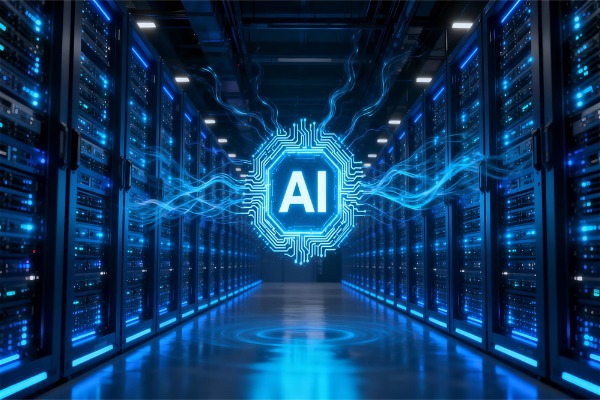
In 2026, the most significant trend in the field of technology is no longer the simple superposition of AI and blockchain, but their native symbiosis - this deep integration breaks the traditional technological boundaries, giving birth to a new economic form centered on AI agents, promoting the evolution of the digital world from "value interconnection" to "intelligent value interconnection", and reshaping the global flow of value, computing power, and intelligence.
Unlike the previous "plug-in style" shallow integration, the integration of AI and Web3 in 2026 realizes the synergy of underlying logic. The core is to make AI a "native resident" on the chain, and let Web3 provide AI with a trusted underlying architecture for operation. The two empower each other and coexist and prosper. McKinsey predicts that by 2030, the market size of this integration field will exceed $47 billion, becoming the core driving force of the digital economy, and the rise of the intelligent agent economy is the most intuitive manifestation of this integration trend.

The large-scale implementation of AI agent autonomous trading is driving the financial sector into the era of "machine native". As the core application scenario of intelligent agent economy, AI agents can rely on real-time on chain data, market sentiment and trend models to independently complete a series of complex operations such as transaction execution, risk control, contract synthesis, etc., without the need for manual intervention to achieve efficient decision-making. This autonomous trading model not only solves the pain points of slow response and large human errors in traditional on chain transactions, but also promotes the formation of a "machine native financial system" - multiple AI agents collaborate through smart contracts to compress complex financial processes to the minute level, and even achieve fine operations such as cross chain arbitrage and automatic clearing. The AI Hub V2, jointly developed by TRON and ChainGPT, has reduced DeFi slippage to below 0.1% and improved capital efficiency by more than 30%.

Decentralized AI training has activated a new type of gig economy that involves everyone, making computing power and data valuable assets that can be monetized. Traditional AI training relies on centralized servers, which suffer from pain points such as computing power monopoly, data privacy breaches, and imbalanced incentive mechanisms. However, the decentralized nature of Web3 provides a solution for cracking these issues. Through the data crowdsourcing model, ordinary users can freely contribute idle computing power and personal data to participate in AI model training, and receive token rewards through smart contracts, forming a virtuous ecosystem of "contribution equals reward". This model not only lowers the threshold for AI training, allowing small and medium-sized enterprises to obtain computing power support at a lower cost, but also creates a new form of employment - users do not need professional skills, and can participate in the value distribution of the AI industry through sharing computing power or data. Projects such as Render and Bittensor have achieved a 35% -60% reduction in computing power costs compared to centralized platforms, becoming benchmarks in this field.
The intelligent upgrade of the prediction market has further expanded the application boundaries of AI and Web3 integration. With the combination of LLM (Large Language Model) and oracle, the difficult problem of determining controversial results in traditional prediction markets has been effectively solved. LLM can conduct in-depth analysis of unstructured data, accurately interpret the results of complex events, and then use oracle to upload the judgment results on the chain, ensuring fairness, transparency, and immutability. On this basis, the prediction market is expanding from simple event prediction to diversified scenarios such as real-time risk assessment, automated hedging, and asset price prediction, becoming an important auxiliary tool for financial risk control and investment decision-making, providing more accurate risk avoidance solutions for institutions and individuals.
HongKong.info Committed to providing fair and transparent reports. This article aims to provide accurate and timely information, but should not be construed as financial or investment advice. Due to the rapidly changing market conditions, we recommend that you verify the information yourself and consult a professional before making any decisions based on this information.

Popular Hong Kong News

Recommended Reading








Popular Searches
Related News