After the US stock market closed, Intel rose more than 10%, and chip stocks helped S&P reach a new high!


Although the non farm payroll data released on that day was weaker than market expectations, it did not shake investors' core expectations for the Federal Reserve to cut interest rates within the year, providing stable support for the market. It is worth noting that in the first full trading week of 2026, the three major Wall Street indices all closed higher, with gains mainly coming from sectors such as raw materials and industry that previously lagged behind technology stocks, highlighting the increasingly distinct market rotation characteristics.
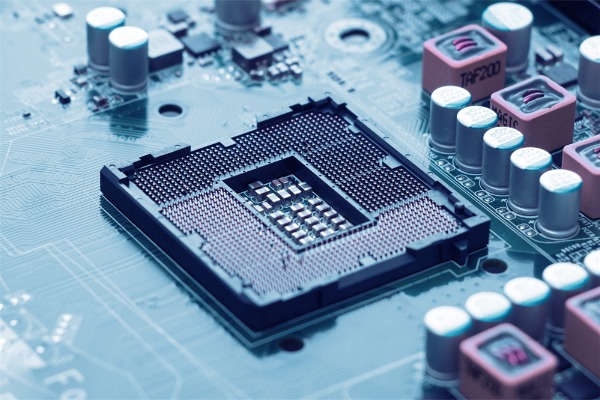
Chip stocks have become the "core engine" of the daily market trend. Among them, industry giant Intel performed particularly well, closing up over 10%, the largest daily increase since September last year. Earlier, US President Trump revealed that he had a "very good meeting" with Intel's CEO, injecting strong momentum into the stock price. In addition to Intel, other chip stocks such as Broadcom also strengthened, driving the Philadelphia Semiconductor Index up 2.7% to a historic high. The collective outbreak of the chip sector is partly due to the market's expectation of sustained high prosperity in the AI industry chain, and the business promotion of companies such as Broadcom in the field of AI chip customization is still attracting investors' attention; On the other hand, storage and device stocks have also been boosted by brokerage research reports, such as Mizuho Securities raising its target price for Panlin Group, which has driven related stocks to rise significantly. With the combination of multiple positive factors, chip stocks have become a key force driving the overall market upward.

Led by chip stocks, major US stock indices closed higher across the board. As of the close, the S&P 500 index rose 0.65% to 6966.28 points, setting a new record for the highest closing price in history; The Dow Jones Industrial Average rose 0.48% to close at 49504.07, also hitting a new closing high; The Nasdaq Composite Index rose 0.81% to 23671.35 points. From the perspective of sector performance, 9 out of 11 industry sectors in the S&P 500 index achieved gains. Except for the technology sector where chip stocks are located, the materials sector led the way up by 1.8%, while the utilities sector rose by 1.24%, becoming an important supporting force for the daily market.
Although the employment data released on that day was lower than expected, it did not have a significant impact on market sentiment. According to data from the US Department of Labor, the number of new non farm jobs added in the US in December 2025 was only 50000, lower than market expectations of 55000. Additionally, employment data for October and November 2025 have been revised downwards, indicating a continued weakness in the US labor market. However, the unemployment rate announced during the same period fell to 4.4%, indicating that there are no signs of rapid deterioration in the labor market, strengthening the market's judgment of the moderate adjustment state of "low recruitment, low layoffs" in the US economy, and enhancing confidence that the economy is expected to avoid recession. In this context, the market's expectation for the Federal Reserve to cut interest rates this year has not changed significantly, and the expectation of loose liquidity still provides underlying support for the stock market.
From the weekly performance perspective, the first full trading week of 2026 will be a "good start" for the US stock market. The three major indexes all closed higher, with the Dow Jones Industrial Average rising by over 2.3%, the S&P 500 index rising by 1.57%, and the Nasdaq rising by 1.88%. It is worth noting that this week's upward trend is not dominated by technology stocks that previously led the way, but rather by sectors such as raw materials and industry that have lagged behind in recent years. The S&P 500 Value Index has risen by about 3% year to date, clearly outperforming the growth index by about 1%. This sector rotation characteristic indicates that funds are spreading from overvalued technology stocks to stagnant assets, and the market's upward momentum is more diversified, reflecting investors' more balanced confidence in the subsequent market.
HongKong.info Committed to providing fair and transparent reports. This article aims to provide accurate and timely information, but should not be construed as financial or investment advice. Due to the rapidly changing market conditions, we recommend that you verify the information yourself and consult a professional before making any decisions based on this information.

Popular Hong Kong News

Recommended Reading








Popular Searches
Related News