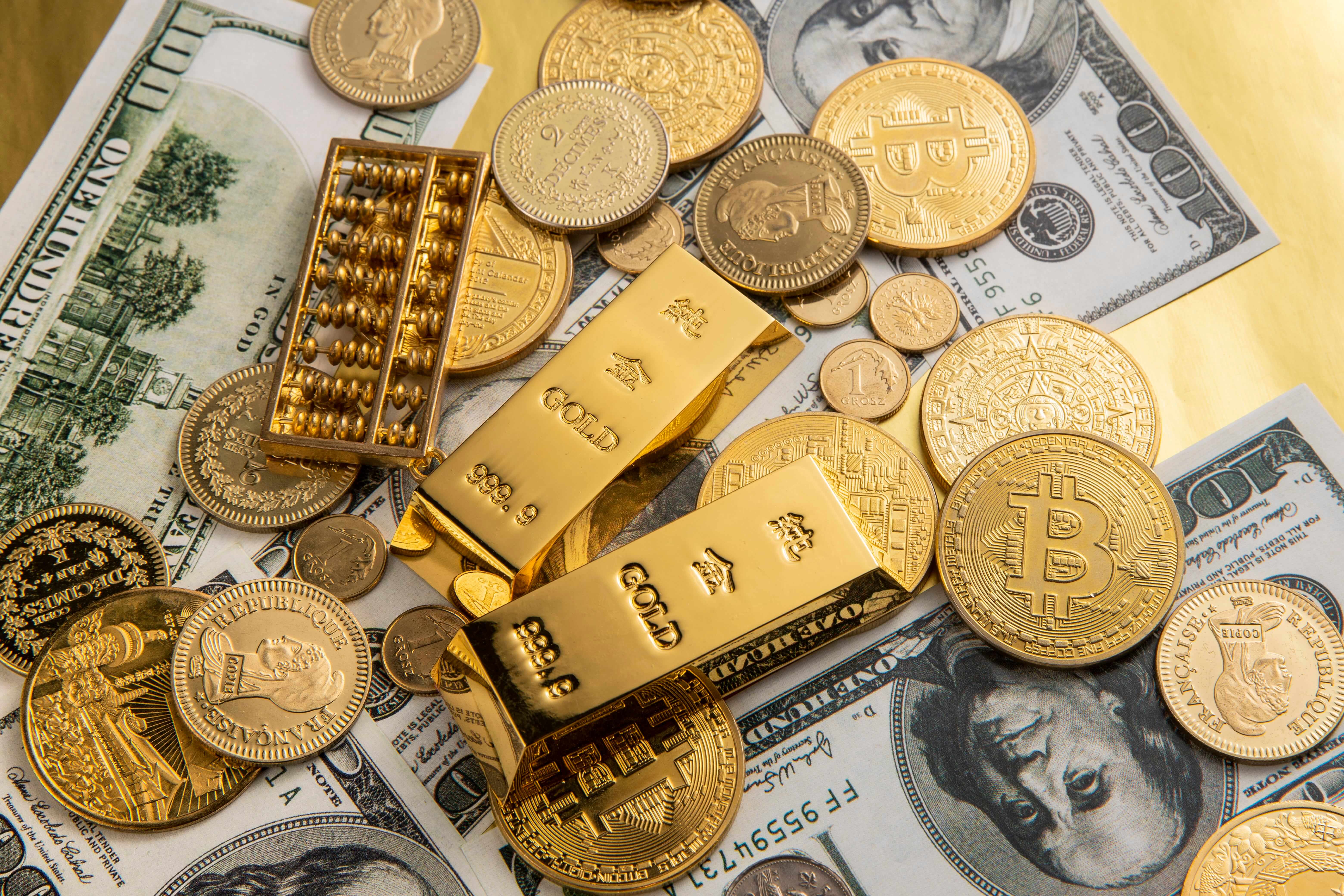
The gold market continues its strong trend of reaching new highs, with prices breaking through the pace far beyond market expectations. On the same day, spot gold hit a high of $5181.84 per ounce, a significant increase from the previous trading day's closing price, completing a solid breakthrough to the $5000 integer level - just the day before, gold had just hit this important psychological level for the first time, achieving a nearly $200 increase in just two days, demonstrating the strength of fund raising. In contrast, the performance of gold futures for February delivery was relatively stable, closing at $5082.60 per ounce. The price difference between futures and spot reflects the market's caution towards short-term fluctuations, while also highlighting the strong demand in the spot market.
1、 Gold breaks through high core: dual protection of safe haven demand and monetary easing
The core driving force behind the current upward trend of gold still stems from the dual uncertainty of the global economy and geopolitics. The current global economic data shows a trend of differentiation, with the slowdown of the US employment situation coupled with concerns about fiscal deficit expansion, and the market's doubts about an economic soft landing heating up; At the same time, geopolitical conflicts such as the Greenland issue continue to escalate, further boosting market risk aversion and prompting investors to use gold as a core hedging tool. The Federal Reserve had previously cut interest rates by 25 basis points as scheduled and initiated balance sheet expansion. The loose monetary policy environment reduced the opportunity cost of holding interest free gold, providing liquidity support for the upward trend of gold prices.
Institutions generally hold an optimistic attitude towards the future of gold and have raised their target prices one after another. Goldman Sachs has raised its gold target price for December 2026 to $5400 per ounce, and may even touch $6000 in the spring; JPMorgan Chase emphasized that even if the gold price exceeds $5000, central banks of various countries will continue to buy gold to provide a solid bottom for the gold price, in order to achieve the risk reduction of foreign exchange reserves. UBS also pointed out that the dual buying of central banks and private investors forms a "dual engine", and the central bank's gold purchase volume may reach 950 tons in 2026, locking in most of the global supply and further strengthening the strategic allocation value of gold.
2、 Silver leads the rise, highlighting elasticity: industrial demand and supply-demand gap become key factors
Compared to the steady rise of gold, silver, with its dual advantages of "financial attributes+industrial attributes", has shown stronger upward elasticity. Its 7.7% daily increase has expanded the cumulative increase within the year to 57%, becoming the "leading force" in this round of precious metal bull market. Unlike gold, which mainly relies on safe haven demand, the rise of silver is more supported by fundamentals. The imbalance between supply and demand resonates with the outbreak of industrial demand, forming the core logic of price increase.
On the supply side, the global silver market has experienced a supply gap for several consecutive years, with a gap of 4632 tons in 2024 and a high gap in 2025. London's deliverable inventory has dropped to its lowest level in a decade. As a core country that controls over 60% of the world's silver refining capacity, China has implemented export controls since January 1, 2026. Only 44 companies have obtained export qualifications, directly leading to a cliff like decline in global supply and further exacerbating the supply-demand tension. On the demand side, there has been an explosive growth, with emerging industries such as photovoltaic modules, new energy vehicles, and AI data centers experiencing a surge in demand for silver. The proportion of silver consumption in the photovoltaic industry has skyrocketed to 55% of the global total demand, and the widespread adoption of N-type battery technology has significantly increased the consumption of single silver paste.
HongKong.info Committed to providing fair and transparent reports. This article aims to provide accurate and timely information, but should not be construed as financial or investment advice. Due to the rapidly changing market conditions, we recommend that you verify the information yourself and consult a professional before making any decisions based on this information.

Popular Hong Kong News

Recommended Reading