The significant drop in international gold prices this time is mainly due to two key factors, which directly led to a large-scale outflow of market funds. On the one hand, the continuous rise in real interest rates has become the core force suppressing gold prices. Gold, as a typical interest free asset, has a strong negative correlation between its holding cost and real interest rates. When real interest rates rise, holding gold cannot generate interest income, but sacrifices the interest returns of bonds and cash assets. The opportunity cost of holding gold increases significantly, and funds naturally flow from the gold market to interest bearing assets such as the US dollar and US bonds, causing pressure on the price of gold to fall. The current high range of real interest rates in the United States, between 1.8% and 2.0%, further strengthens this trend of capital flow.
On the other hand, the release of hawkish signals from the Federal Reserve has significantly weakened market expectations for interest rate cuts. In the March Federal Reserve interest rate meeting, it was clearly stated that the benchmark interest rate would remain unchanged, and the number of interest rate cuts for the whole year of 2026 would be significantly reduced from the market's expected three to one. The first interest rate cut window was postponed until after September, and Powell even stated that "interest rates will not be cut until inflation continues to fall". This hawkish attitude, which exceeded expectations, completely broke the market's optimistic expectation of loose interest rate cuts at the beginning of the year and further intensified the selling pressure on the gold market. In addition, when the gold price fell below key psychological and technical thresholds, it triggered programmed stop loss and leveraged fund liquidation, forming a negative feedback loop of "killing more", further amplifying the decline and pushing the gold price to hit its largest weekly decline in many years.
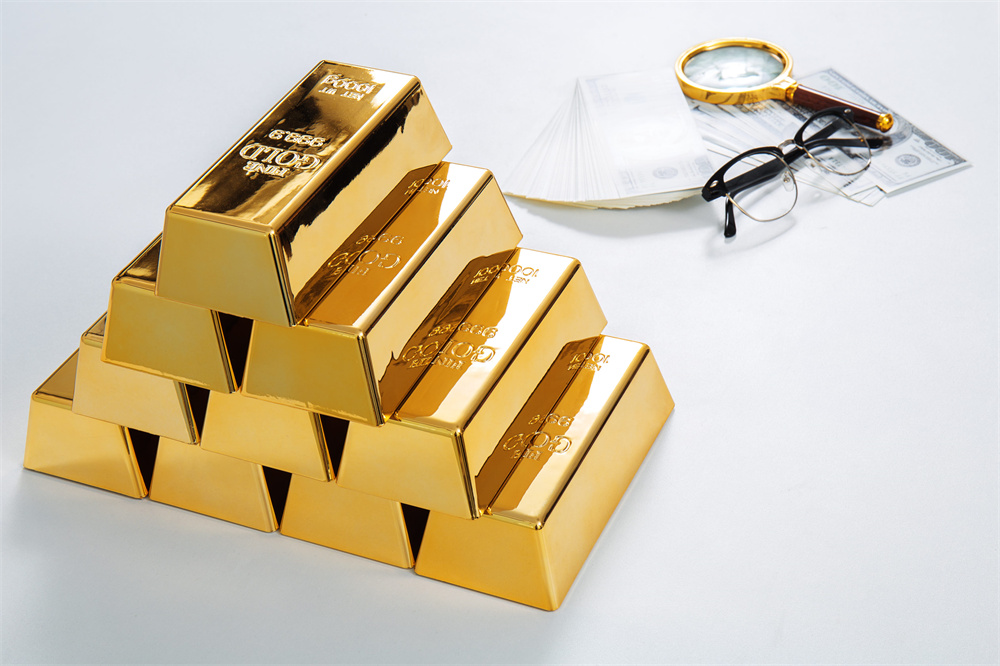
In the short term, the price of gold still faces sustained pressure, and caution should be exercised when buying at the bottom. Industry analysis generally believes that the short-term negative factors in the current gold market have not been fully digested, and there is still a possibility of further fluctuations and downward movements in gold prices. From a policy perspective, the Federal Reserve's high interest rate policy will continue for a period of time, and the pattern of high real interest rates is difficult to change in the short term, which will continue to have a suppressive effect on gold; From the perspective of market sentiment, the panic selling triggered by this sharp decline has not completely subsided, and the trend of capital outflow is still continuing. The tight liquidity situation in the market may persist in the short term; From a technical perspective, the gold price has fallen below the key support level, with a clear bearish trend and weak short-term rebound. If the key support cannot be held, it may further decline. Therefore, for short-term speculators, the current situation is not a good opportunity to buy. Blindly buying at the bottom may face the risk of further losses, and they need to wait for market sentiment to stabilize and the downward momentum to weaken before considering whether to intervene.
However, in the long run, the allocation value of gold has not disappeared due to short-term declines, and long-term investors can seize the opportunity for a pullback. Despite short-term pressure on gold prices, the core allocation value of gold remains prominent against the dual backdrop of inflation risks and geopolitical conflicts. From the perspective of anti inflation, since the collapse of the US gold standard in 1971, the price of gold denominated in US dollars has risen by 9% annually, outperforming inflation in the long run, making it a high-quality choice to hedge against inflation and achieve asset preservation; From the perspective of geopolitical risks, the current US Israel Iran conflict continues, and the global geopolitical situation remains tense. Although this geopolitical conflict did not drive up gold prices, but instead formed a reverse suppression, in the long run, the uncertainty brought by geopolitical risks will still support the safe haven demand for gold.
In addition, the trend of global central banks continuing to increase their holdings of gold remains unchanged. In 2025, the net purchase of gold by global central banks reached 863 tons. Even if it shrinks at the beginning of 2026, in the long run, central bank purchases will still provide solid support for gold prices. At the same time, long-term structural factors such as accelerated "de dollarization" and soaring global debt risk have further consolidated the long-term value of gold. The World Gold Council has also made it clear that if the Middle East conflict persists and inflation risks intensify, the strategic allocation value of gold will continue to be supported.
HongKong.info Committed to providing fair and transparent reports. This article aims to provide accurate and timely information, but should not be construed as financial or investment advice. Due to the rapidly changing market conditions, we recommend that you verify the information yourself and consult a professional before making any decisions based on this information.

Popular Hong Kong News

Recommended Reading