On December 19, 2025, the technology industry received heavy news: 24 of the world's top AI and technology companies, including Microsoft, Google (Alphabet), Nvidia, OpenAI, etc., officially signed agreements with the US government to join the national AI research project launched by the Trump administration on November 24- the Genesis Mission. This strategic layout, positioned as the third national technology mobilization after the Manhattan Project and Apollo Program, focuses on "AI reconstruction of scientific research mode" and integrates resources from government, enterprises, industry, academia, and research chains. It targets breakthroughs in six strategic areas including energy, semiconductors, and biotechnology, marking a comprehensive acceleration of the United States' national efforts to reconstruct the innovation system of the AI era.
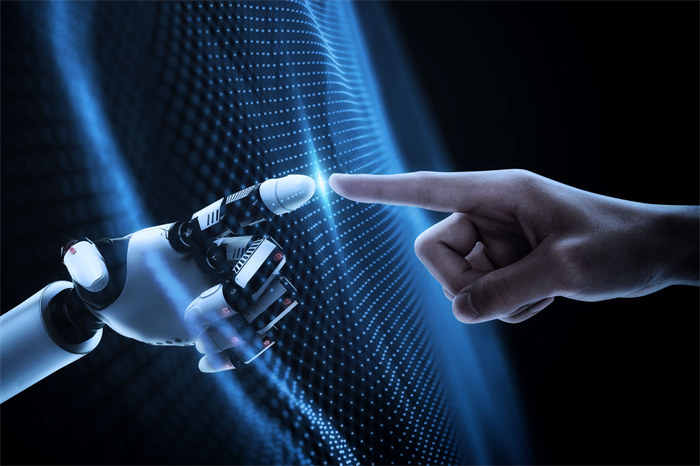
As a highly hierarchical national strategy, the core goal of the "Genesis Plan" is to "accelerate scientific discovery with AI". According to the official statement from the White House, the plan is to integrate the supercomputing power of 17 national laboratories of the US Department of Energy and over 100PB of federal research datasets to create the world's largest AI research closed-loop platform - using AI intelligent agents to achieve full process automation from literature analysis, hypothesis formulation to experimental design, and then relying on the robot laboratory network to complete "unmanned research" landing. Ultimately, the traditional research cycle will be greatly shortened, and the "most challenging problems of this century" such as nuclear fusion energy, quantum computing, and new drug development will be overcome. The Director of the White House Office of Science and Technology Policy has referred to it as the "largest federal science resource mobilization operation since the Apollo program," highlighting its strategic significance in reshaping the country's innovation competitiveness.
The collective participation of 24 enterprises has established a core operational pattern of "government guidance, enterprise mainstay, and industry university research collaboration". From the perspective of enterprise division of labor, this cross-border collaboration presents a clear gradient and complementarity: computing power and chip manufacturers have become the "cornerstone of infrastructure", and Nvidia will integrate supercomputing and AI systems, AMD、 Intel and Cerebras provide dedicated chip support, with Nvidia signing a memorandum of understanding with the US Department of Energy to clarify cooperation priorities in areas such as fusion energy and quantum computing; Cloud and software giants build a 'technology service hub', Google launches AI co scientist virtual collaboration tool based on Gemini to provide cutting-edge model support for national laboratory scientists, while Microsoft and Amazon AWS open cloud platforms and data collaboration capabilities; OpenAI, Anthropic, xAI and other AI research and development institutions output "core algorithm power" to assist experimental prediction and automation with cutting-edge models; Accenture, Palantir and other companies focus on "industry landing protection", providing data governance and industry solutions. This full chain resource integration is the key support for the "Genesis Plan" to achieve the goal of "building an AI research loop in 9 months and promoting technology transformation in 18 months".
From the perspective of application, the utilitarian orientation of the plan is very clear, and the six core areas all directly point to the key links of national strategic security and economic competitiveness. In the field of energy, AI will empower research on nuclear fusion and fission, helping to improve grid efficiency and increase energy supply; In the fields of semiconductors and advanced manufacturing, we will consolidate the United States' dominant position in the high-end industry chain through digital twin and supply chain optimization technologies; In the field of biotechnology, accelerate the development of new drugs and breakthroughs in synthetic biology, and promote the upgrading of the medical and health industry; Quantum information science, as the high ground of future technological competition, accelerates algorithm discovery and technology implementation through AI. It can be said that this plan is essentially an attempt to "empower and increase efficiency" in traditional advantageous fields through AI technology, and to build technological advantages in key areas.
The advancement of this cooperation will undoubtedly have a profound impact on the global technological landscape. In the short term, the AI computing power, cloud services, and semiconductor sectors of the US stock market have received positive feedback. On the day of the launch of the plan on November 24th, Alphabet rose more than 2% after hours, and the stock prices of companies such as Broadcom and Micron Technology have all risen to varying degrees. With 24 companies officially entering the market, the valuation support of related core targets may be further strengthened. In the medium to long term, the plan may trigger a global "AI research competition". The European Union has planned to invest 8 billion euros to build AI supercomputers, and China's "East West Calculation" project is also accelerating its layout. The competition for technological high ground among countries will become increasingly fierce. However, at the same time, the structural contradictions hidden in the plan may also constrain its implementation effectiveness: the training of AI large models and the operation of automated laboratories require a huge amount of electricity, and the contradiction between computing power expansion and energy supply is difficult to reconcile in the short term. According to calculations, the power consumption of a single GPT-4 training session is equivalent to the annual electricity consumption of 3000 households, and the energy consumption during the inference phase is 10 times that of the training phase; The "loosening" model of federal unified regulation replacing local legislation may inhibit AI ethical innovation and exacerbate the crisis of public trust; And its exclusive cooperation orientation may further exacerbate the risk of global technological "decoupling" and widen the technological gap between developed and developing countries.
It is worth noting that the progress of the plan still faces many uncertainties. In terms of funding, the specific source of the budget has not yet been clarified. The White House has hinted at the need for additional funding from Congress, but the previous government shutdown has highlighted congressional divisions and raised doubts about the progress of funding approval; In terms of data security, the integration and sharing of massive sensitive federal scientific research data face risks of leakage and malicious exploitation; In terms of talent, the shortage of interdisciplinary composite talents may affect the implementation effect of the "human-machine collaboration" scientific research model. Whether these challenges can be effectively addressed will directly determine whether the Genesis Plan can achieve its ambitious strategic goals.
HongKong.info Committed to providing fair and transparent reports. This article aims to provide accurate and timely information, but should not be construed as financial or investment advice. Due to the rapidly changing market conditions, we recommend that you verify the information yourself and consult a professional before making any decisions based on this information.

Popular Hong Kong News

Recommended Reading





Popular Searches
Related News