By 2026, China's GDP growth rate will reach 4.8%, and the stock market return rate is expected to reach 20%


1、 Economic growth rate of 4.8%: dual support formed by export bottoming out and real estate slow-release
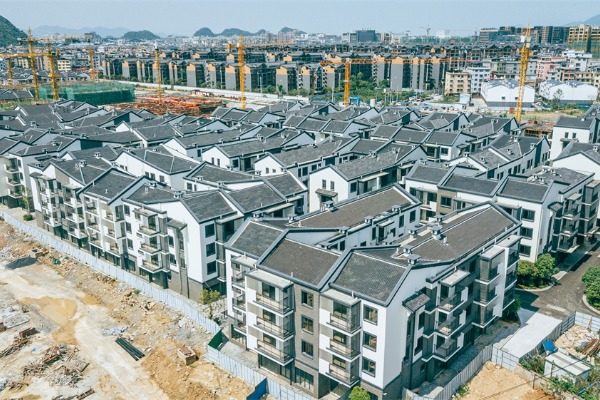
Goldman Sachs emphasized in the report that the recovery momentum of the Chinese economy in 2026 mainly comes from the positive improvement of two key variables, forming a support pattern of "one strong and one slow". On the one hand, the negative impact of the real estate sector continues to weaken, becoming an important prerequisite for economic stabilization. After multiple rounds of policies to stabilize the real estate market, the orderly disposal of debt risks by real estate companies has been promoted, and the pace of inventory depletion in third - and fourth tier cities has accelerated. Coupled with the continuous landing of special funds for guaranteed delivery of buildings, the drag effect of real estate on the upstream and downstream industrial chains has gradually converged marginally. Although it has not been fully cleared, it is no longer the core bottleneck restricting economic growth, making room for overall economic recovery.
On the other hand, strong exports, as the core pillar, continue to inject momentum into economic growth. Goldman Sachs' Chief China Economist, Shanhui, pointed out in his analysis that China's position in the global trade pattern has undergone a profound transformation from scale expansion to quality improvement in the past 25 years, and the optimization of trade structure has endowed exports with strong risk resistance capabilities. Although the proportion of China's exports in US imports has been adjusted periodically after 2018 due to the impact of the diversification strategy of trading partners, the global decentralized layout of export destinations has achieved results, and the proportion of exports to emerging markets and countries along the "the Belt and Road" has continued to increase, effectively hedging the risk of fluctuations in the single market.
Based on this pattern, Goldman Sachs predicts that China's exports will maintain an average annual growth rate of 5% to 6% in the coming years, significantly better than the global trade average of 2% to 3%. The nominal export growth rate denominated in US dollars is expected to reach 5.6%. Behind the resilience of exports, it is not only due to the demand support brought by the steady growth of the global economy, but also inseparable from China's dominant position in key mineral fields such as rare earths, as well as its structural advantages in transforming export products into high value-added products, which have become the core support force for the 4.8% GDP growth rate in 2026.

2、 The stock market is aiming for a 20% return rate: dual index targets are clear, profit driven becomes the core logic
In line with the expectation of a mild economic recovery, Goldman Sachs holds an optimistic attitude towards the performance of the Chinese stock market in 2026, setting its annual return target in the range of 15% to 20%. At the same time, it provides clear index targets: the MSCI China Index is expected to challenge 100 points by the end of the year, while the CSI 300 Index is targeted at 5200 points. The expected increase in the two indices is about 20% and 12% respectively, showing structural differentiation characteristics. This prediction is not based on valuation repair, but on the core logic of substantial improvement in corporate profits, indicating that the market is entering a new stage of "profit driven bull market".
From the perspective of index differences, the higher increase of MSCI China Index is expected to be due to the structural advantages of its constituent stocks - the index covers Hong Kong stock Internet platforms and US stock China concept stocks, with AI exposure accounting for more than 50% and extremely sensitive to global capital flows. As the Federal Reserve's interest rate cut cycle begins, the improvement in US dollar liquidity is expected to drive foreign investment back to the Hong Kong technology sector, becoming a key factor for the MSCI China Index to achieve excess returns. The Shanghai and Shenzhen 300 Index is mainly composed of A-share blue chip stocks, with a relatively high proportion of heavyweight sectors such as finance and industry. Its elasticity is relatively mild, and its gains rely more on the gradual realization of domestic economic recovery and policy dividends.
The core driving force supporting the upward trend of the stock market includes not only the fundamental improvement brought about by macroeconomic stabilization, but also the combination of multiple policies and industrial dividends. At the financial end, especially the issuance of treasury bond is expected to continue to increase, focusing on new quality productivity infrastructure such as computing center and low altitude economy; On the monetary side, there is still room for MLF interest rates to be lowered, and asymmetric LPR rate cuts will further reduce corporate financing costs. At the same time, the industrialization of AI has entered the first year of monetization, driving the profit growth rate of industries such as semiconductors and intelligent terminals to climb to 25% to 30%, becoming an important engine for the structural market trend of the stock market.
HongKong.info Committed to providing fair and transparent reports. This article aims to provide accurate and timely information, but should not be construed as financial or investment advice. Due to the rapidly changing market conditions, we recommend that you verify the information yourself and consult a professional before making any decisions based on this information.

Popular Hong Kong News

Recommended Reading