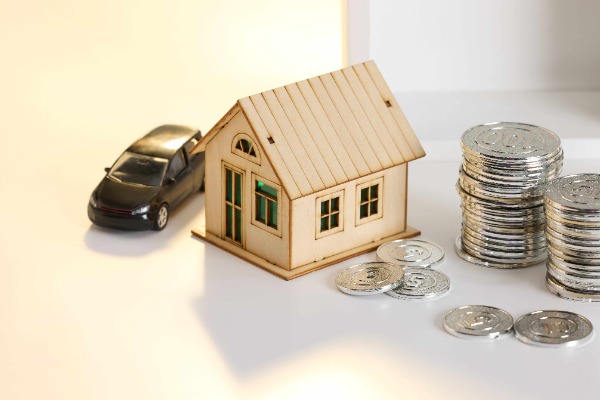
In 2025, residential prices in Hong Kong have already rebounded by 5%, and two major investment banks predict that the housing price increase will climb to 10% by 2026. The upward trend will continue in 2027, marking the official farewell of the sluggish Hong Kong housing market and entering a new cycle of several years of upward trend. A market feast of both quantity and price is accelerating.
1、 Investment banks collectively bullish: clear signals of bottoming out, clear expectations for price increases
The optimistic turn in the Hong Kong housing market this time is not the subjective prediction of a single institution, but the consensus judgment of top investment banks based on macro data and market signals. Morgan Stanley has raised its view on the Hong Kong real estate industry to "attractive", clearly stating that 2025 is a key year for housing prices to bottom out. With multiple favorable factors fermenting, 2026 will see a significant increase of 10%, and rental levels will rise by 5% simultaneously, forming a positive cycle of "price increase and rent increase". Citigroup also emphasized in its research report that after hitting bottom, housing prices have shown strong resilience to recovery, and the fundamental improvement of supply and demand patterns will support the market to continue to rise, with a new upward cycle lasting at least 3-5 years.
The optimistic expectations of investment banks are not castles in the air, but supported by solid data. According to data from the Land Registry of the Hong Kong Special Administrative Region Government, the total number of registered building purchase and sale contracts in 2025 reached 80702, setting a new high in four years; Among them, there were 62832 residential building transactions registered, with a total value of HKD 519.83 billion, an increase of 18.3% and 14.4% respectively year-on-year, indicating a preliminary trend of both quantity and price rising. At the beginning of 2026, the heat of the year will be even stronger. Meilian Property predicts that the transaction volume of first-hand new houses in January will exceed 2000, marking the best start since the implementation of relevant regulations in 2013. The performance of the luxury housing market is particularly impressive, with 6 transactions exceeding HKD 100 million recorded in the first five days of January alone, doubling compared to the same period last year.

2、 Reshaping the supply-demand pattern: supply shortage highlights, demand momentum is abundant
The core logic of the housing market recovery stems from the fundamental improvement of the supply and demand pattern, which is also the core basis for investment banks to be bullish. On the supply side, the newly added land supply in Hong Kong has dropped to the lowest level in 14 years and continues to be in a state of supply shortage - the number of newly added supply units has been lower than market sales volume for many years, leading to continuous consumption of available inventory and a significant acceleration in the digestion speed of residential projects. Behind the tight land supply is a combination of multiple factors such as prolonged land development cycles, high land prices, and rising construction costs. Even if the government introduces measures such as the "Land Sharing Plan" and simplifies the approval process for brownfield development, it is still difficult to reverse the tight supply pattern in the short term.
The sustained release of demand injects strong momentum into the market. In February 2024, Hong Kong abolished the stamp duty policy for foreign and mainland Chinese buyers, greatly stimulating cross-border housing demand. Mainland buyers are active in various price ranges of properties, and the number of inquiries from high net worth individuals for high-end properties worth over HKD 10 million has significantly increased. At the same time, the optimization of Hong Kong's talent policy has shown results, with the annual number of mainland immigrants reaching 140000 after the epidemic, doubling compared to before the epidemic. The positive population growth directly drives the expansion of housing demand. In addition, the start of the interest rate cut cycle, the wealth effect brought about by the 28% rise in the Hang Seng Index in 2025, and the strengthening of the RMB exchange rate have further boosted buyers' confidence in entering the market, forming multiple supports on the demand side.
3、 Market structure differentiation: luxury homes lead the rise, and the entire chain recovers synchronously
The recovery of the Hong Kong housing market this time presents obvious structural differentiation characteristics, with the luxury housing market becoming the main force leading the rise. Data shows that the activity of luxury housing transactions exceeding HKD 100 million at the beginning of 2026 has surged, and high net worth individuals consider high-end properties in Hong Kong as an important asset allocation choice, leading the price increase of core luxury housing sectors such as the Southern and Central Western districts. The top ten housing estates monitored by Zhongyuan Real Estate have also achieved a simultaneous increase in both quantity and price, reflecting the emerging transmission effect of the recovery from the high-end market to the rigid demand sector.
HongKong.info Committed to providing fair and transparent reports. This article aims to provide accurate and timely information, but should not be construed as financial or investment advice. Due to the rapidly changing market conditions, we recommend that you verify the information yourself and consult a professional before making any decisions based on this information.

Popular Hong Kong News

Recommended Reading





Popular Searches
Related News