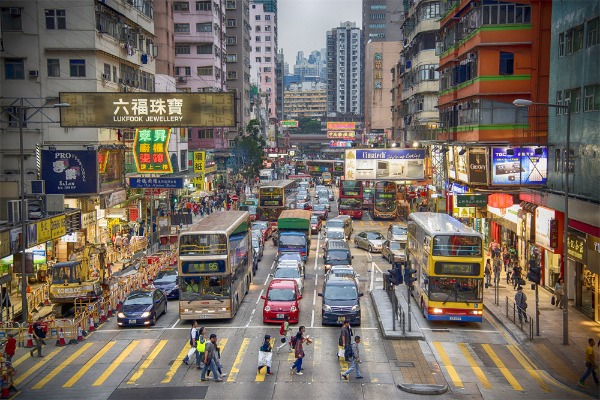
Hong Kong's two-way tourism highlights the new vitality of integration between Hong Kong, Macao and the mainland


In 2025, whether it is Hong Kong and Macao residents' northward exploration of mainland customs, or Hong Kong residents' outbound travel to explore the world, they have all delivered impressive results. Behind the data is not only the increase in tourism popularity, but also the profound integration of Hong Kong, Macao and the mainland, as well as the development trend of "interconnection and mutual benefit", making the atmosphere of two-way travel even more intense.
In 2025, the number of Hong Kong and Macao residents traveling to the mainland will both reach a historical high, and the trend of "going north" will continue to heat up, becoming the most vivid portrayal of the integration between Hong Kong, Macao and the mainland. Among them, the number of Hong Kong residents traveling to the mainland reached about 93.067 million, a year-on-year increase of 14%; The number of Macau residents traveling to the mainland for tourism is about 37 million, both of which have broken historical records, intuitively demonstrating the strong attraction of the mainland to Hong Kong and Macau residents. Nowadays, "northbound" tourism is no longer an occasional leisure choice, but gradually integrated into the daily lives of Hong Kong and Macao residents, presenting distinctive characteristics of high frequency, convenience, and diversity.

The convenient transportation "hard connectivity" provides a safeguard for the "northward" trend, making short distance travel and "micro vacations" a reality. A number of "super projects" in the Greater Bay Area, such as the Guangzhou Shenzhen Hong Kong High speed Railway, the Hong Kong Zhuhai Macao Bridge, and the Shenzhen China Link, have greatly shortened the time and space distance between Hong Kong, Macao, and the mainland, and built a convenient and efficient "1-hour living circle". Among them, the Hong Kong Zhuhai Macao Bridge, as the "golden channel" connecting Guangdong, Hong Kong and Macao, is not only a transportation hub, but also a landmark for cultural and tourism check-in. By 2025, the number of Hong Kong residents leaving the country through the Hong Kong Zhuhai Macao Bridge will reach 10.525 million, a year-on-year increase of 12.2%. At the same time, it will also drive a large number of Hong Kong residents to "go north" through this bridge, making self driving a popular choice. The continued implementation of the "Hong Kong cars heading north" policy has made it more convenient for Hong Kong residents to drive north by themselves. As of June 2025, the number of "Hong Kong cars heading north" via the Hong Kong Zhuhai Macao Bridge has exceeded 2.83 million, and many Hong Kong residents drive to the mainland every week, covering more than ten cities such as Guangzhou, Shenzhen, and Zhuhai, experiencing a different way of life.
In addition to convenient travel, the transformation of tourism purposes also highlights the deep upgrading of "northward" tourism. In the past, Hong Kong and Macao residents mainly went north for shopping and consumption, but now they are gradually shifting towards deep tourism scenes such as cultural experiences, food exploration, and parent-child study tours. They have transformed from casual card tours to immersive experiences of the cultural customs and daily life of the mainland. Whether it's the rural cuisine in Zhongshan, the morning tea in Guangzhou, or the "technology+engineering" cultural and tourism experience on the West Artificial Island of the Shenzhen Zhongshan Corridor, they have all become popular choices for Hong Kong residents to "go north". This transformation not only enriches the tourism experience, but also brings the psychological distance between Hong Kong, Macao and mainland residents closer, promoting cultural integration.
At the same time, the outbound tourism market for Hong Kong residents is also active, demonstrating strong consumption vitality and an open and inclusive attitude. In 2025, the number of Hong Kong residents leaving the country for the whole year exceeded 117 million, a year-on-year increase of 12.3%, setting a new high in recent years. From the perspective of exit methods, land exit remains the mainstream, with 103 million people leaving the country by land throughout the year, a year-on-year increase of 13.9%. Among them, the number of people leaving through the Hong Kong Zhuhai Macao Bridge has steadily increased, becoming an important channel for land exit; Air outbound flights have also maintained steady growth, reaching 11.689 million passengers throughout the year, a year-on-year increase of 3.6%. The routes cover multiple countries and regions around the world, including neighboring Southeast Asian countries as well as Europe, America, and other places. Among them, the frequent air routes between Hong Kong and first tier cities in mainland China have become an important link for two-way tourism.
HongKong.info Committed to providing fair and transparent reports. This article aims to provide accurate and timely information, but should not be construed as financial or investment advice. Due to the rapidly changing market conditions, we recommend that you verify the information yourself and consult a professional before making any decisions based on this information.

Popular Hong Kong News

Recommended Reading







Popular Searches
Related News