The core of car companies entering the market is the urgency of strategic breakthroughs. The current competition in the new energy vehicle industry is intensifying, with price and technology wars intensifying, profit compression, and car companies generally facing growth bottlenecks. As the core carrier of embodied intelligence, humanoid robots are the trillion dollar race track after new energy vehicles. Morgan Stanley predicts that the global market size will reach $5 trillion and the deployment volume will be 1 billion units by 2050. Dongfeng, Changan and other car companies see it as a strategic choice to cultivate new quality productivity and break through the growth ceiling, helping to transform from an "automobile manufacturer" to an "intelligent technology enterprise".
Secondly, intelligent cars and humanoid robot technology share the same origin, which lowers the threshold for car companies to enter the market. The essence of autonomous vehicle is "wheeled robot", and their core technologies are highly overlapping and reusable. He Xiaopeng once stated that 70% of the technology reserves of car companies can be directly applied to robots, and the perception, decision-making, and control technologies of autonomous driving, as well as hardware such as LiDAR and the "three electric" technologies of electric vehicles, can all be transferred and used. In addition, the mature experience of automotive companies in precision manufacturing, automated production lines, and other areas can help robots achieve rapid mass production, which is an advantage that professional robot companies cannot match.
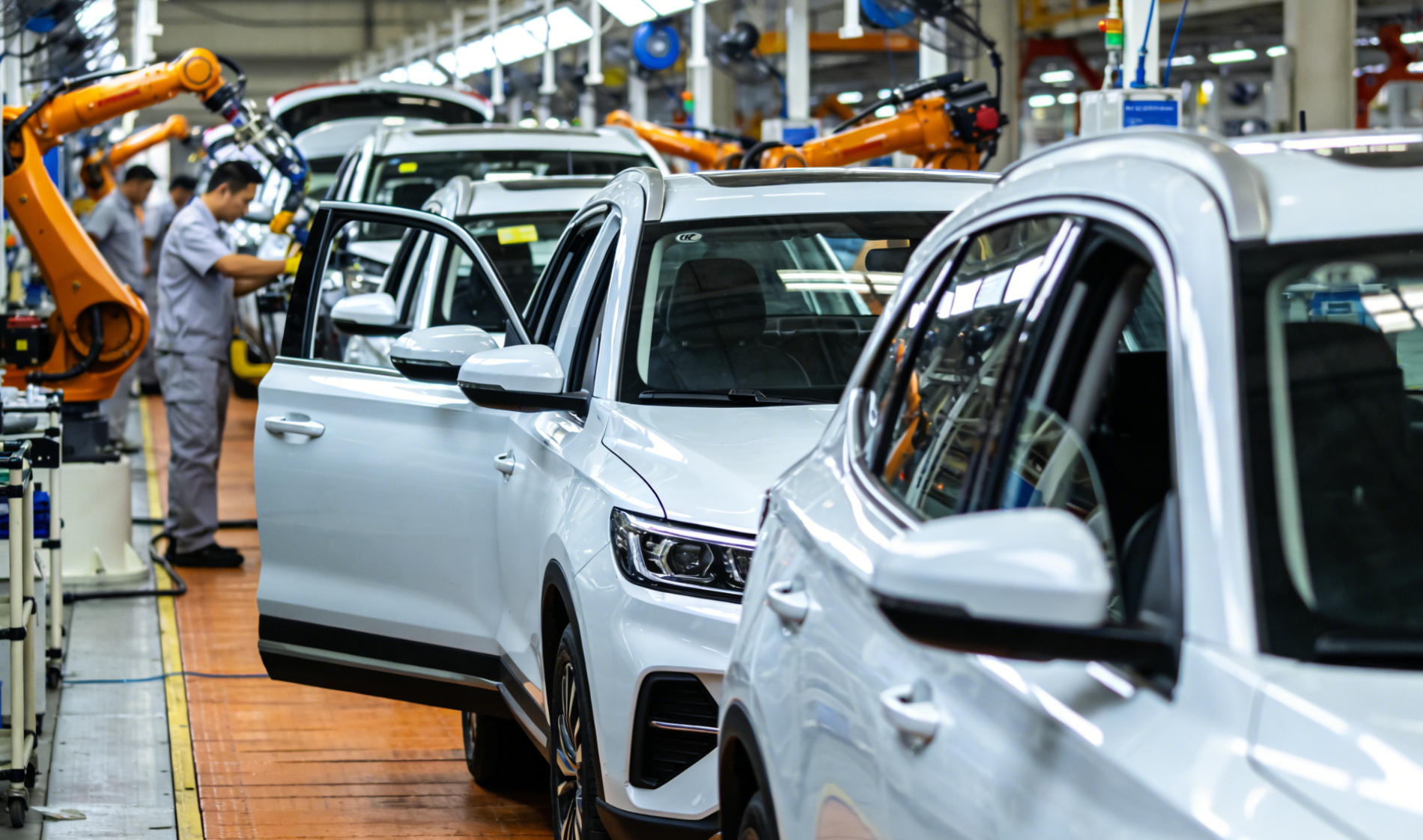
Thirdly, the endogeneity of commercialization landing scenarios makes the automotive industry a natural testing ground for robot landing. The commercialization of humanoid robots is still being explored, and the automotive industry is the most intensive field for industrial robot applications. The production lines and 4S stores of car companies can provide the first batch of application scenarios: Dongfeng robots have entered factories for material handling and sorting, and entered 4S stores for reception; Tianqi Corporation collaborates with popular host manufacturers to deploy robots in logistics areas to undertake heavy tasks. These scenarios can not only assist in the iteration of robot technology, but also generate training data that can form a 'data flywheel', laying the foundation for expanding more scenarios in the future.
Chery's Mojia robots have achieved mass production of 220 units, while Changan's "Xiao'an" and Xiaopeng's IRON robots have made their debut at the auto show. Dongfeng and Sailis are accelerating their layout, and car companies are seizing the initiative in the race track with their own advantages. In 2026, as the first year of mass production of humanoid robots, the industry enters the stage of mass production and commercial exploration. The entry of car companies not only injects vitality, but also accelerates the maturity of embodied intelligence technology.
Overall, the clustering of car companies into humanoid robots is the result of the combined effects of strategic breakthroughs, technological homogeneity, and scenario endogeneity. It is a choice for car companies to actively seek change and grasp technological trends. With the continuous investment of car companies, the cost of robot research and development will be reduced and the landing will be accelerated. The deep integration of the automotive and robot industries will open a new chapter of human-machine symbiosis and promote the leapfrog development of embodied intelligence.
HongKong.info Committed to providing fair and transparent reports. This article aims to provide accurate and timely information, but should not be construed as financial or investment advice. Due to the rapidly changing market conditions, we recommend that you verify the information yourself and consult a professional before making any decisions based on this information.

Popular Hong Kong News

Recommended Reading





Popular Searches
Related News