1、 Technological breakthrough: from "memorizing texts" to "universal cerebellum", achieving freedom of movement
The core bottleneck of traditional humanoid robots lies in their dependence on pre-set programs for actions, similar to "memorizing texts" where one set of code corresponds to one set of actions, making it difficult to flexibly respond to new tasks and unknown scenarios. The GAE system has equipped robots with a universal cerebellum, achieving three revolutionary breakthroughs:
Real time replication, millisecond level response: Relying on motion capture technology and real-time inference of large models, Titan O1 can accurately replicate human body movements in milliseconds, including gestures, postures, force, and rhythm, with a latency as low as 250ms, truly achieving the goal of "moving the robot as the human moves".
Action generalization and zero programming adaptation: GAE has strong zero sample action generalization ability, which can be applied to complex actions and fine operations that have never been seen before without the need to reprogram or train for new actions, completely breaking the shackles of "one action, one program".
Cross ontology collaboration, unlimited scale: The system has cross brand and cross ontology adaptation capabilities, and can seamlessly load robot hardware of different structures and sizes. Further achieving one to many, cross regional remote collaborative control, theoretically capable of simultaneously controlling hundreds or thousands of robots, forming a 'cyber clone army'.
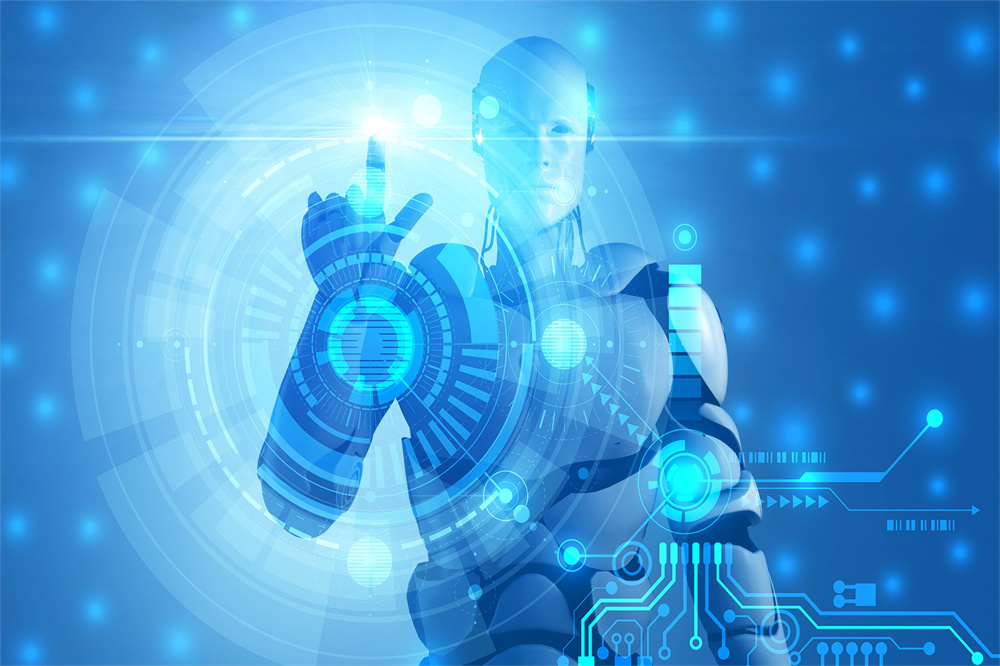
2、 Core architecture: "Brain+cerebellum" dual engines, defining a new paradigm of embodied intelligence
The GAE external embodiment system does not exist in isolation, but is the core component of the "brain+cerebellum" integrated embodied intelligence architecture created by Westlake Robotics:
The "Brain" (LM-VLM Multimodal Model) is responsible for environmental perception, task understanding, and high-level decision-making. It can understand instructions, comprehend scenarios, and plan complex task paths.
The "cerebellum" (GAE action model) focuses on whole-body motion coordination, balance control, and real-time action generation, and is the key to achieving "embodiment outside the body, following closely like a shadow".
The deep integration of the two enables robots not only to "think", but also to "achieve and stabilize", laying a solid foundation for the landing of universal humanoid robots.
HongKong.info Committed to providing fair and transparent reports. This article aims to provide accurate and timely information, but should not be construed as financial or investment advice. Due to the rapidly changing market conditions, we recommend that you verify the information yourself and consult a professional before making any decisions based on this information.

Popular Hong Kong News

Recommended Reading








Popular Searches
Related News